Important Note for Website Owners: Google AdSense classifies health-related content under YMYL (Your Money or Your Life) guidelines. To keep your site compliant with AdSense policies and maintain high E-E-A-T (Experience, Expertise, Authoritativeness, and Trustworthiness), always include a clear medical disclaimer and avoid giving definitive medical diagnoses in your content.
Understanding Common Skin Growths: Types, Symptoms, and When to See a Dermatologist
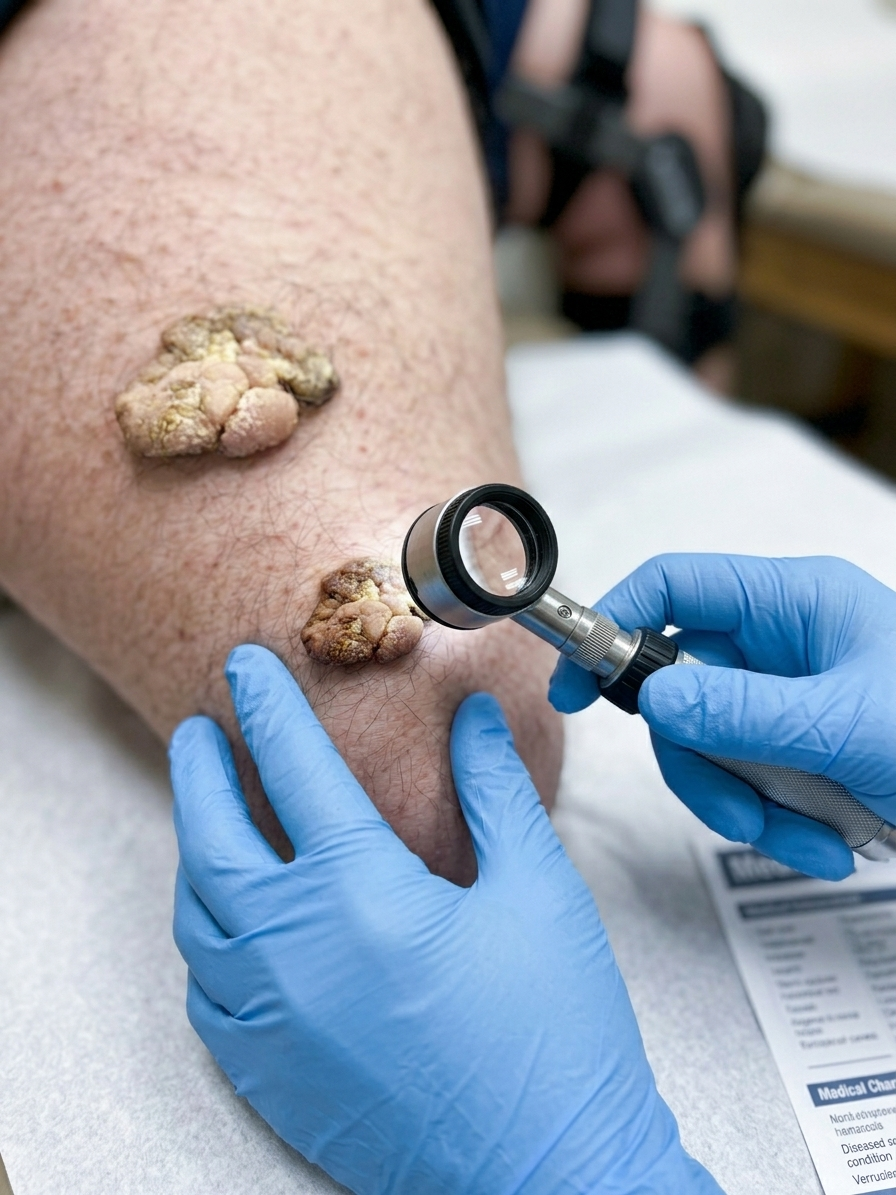
Skin growths come in many shapes, colors, and textures. While many raised or textured spots are completely benign (harmless), others may require professional medical evaluation to rule out underlying conditions.
Understanding how dermatologists classify skin lesions—and knowing the warning signs of serious skin conditions—is key to maintaining healthy skin.
1. Common Types of Raised Skin Growths
When a textured or raised lesion appears on the skin, it typically falls into one of several common categories:
- Seborrheic Keratoses: These are very common, non-cancerous skin growths that often appear as “stuck-on,” waxy, or crusty spots. They can range in color from light tan to dark brown or black and frequently have a rough or bumpy surface.
- Warts (Verrucae): Caused by the human papillomavirus (HPV), warts are benign skin growths that often feel rough to the touch and can appear anywhere on the body.
- Actinic Keratoses: These are rough, scaly patches caused by long-term sun exposure. Unlike seborrheic keratoses, actinic keratoses are considered precancerous and should always be examined by a healthcare provider.
- Skin Tags (Acrochordons): Small, soft, skin-colored or brownish growths that typically hang off the skin near folds (neck, armpits, groin).
- Atypical Moles or Lesions: Moles or growths that show unusual color, asymmetry, or rapid growth.
2. Key Characteristics to Observe
If you notice a new or changing spot on your skin, pay attention to these visual and physical features:
| Feature | What to Look For |
| Texture | Is it smooth, waxy, scaly, crusty, or hard? |
| Color | Is it uniform, or does it contain multiple shades (tan, brown, yellow, black)? |
| Border | Are the edges clearly defined or irregular and jagged? |
| Sensation | Does it itch, bleed, hurt, or feel sensitive? |
3. The ABCDEs of Skin Checkups
Dermatologists recommend using the ABCDE guide when evaluating spots on your body for potential signs of skin cancer (such as melanoma):
- A – Asymmetry: One half of the spot does not match the other half.
- B – Border: The edges are irregular, scalloped, or poorly defined.
- C – Color: The color varies from one area to another (shades of tan, brown, black, white, red, or blue).
- D – Diameter: The spot is larger than 6 millimeters across (about the size of a pencil eraser), although melanomas can sometimes be smaller.
- E – Evolving: The spot is changing in size, shape, color, or texture over time.
4. When Should You Consult a Doctor?
You should always have a qualified healthcare professional or dermatologist evaluate any skin lesion if:
- It bleeds, oozes, or refuses to heal.
- It grows rapidly or changes noticeably in appearance.
- It becomes painful, itchy, or inflamed.
- You are unsure whether the growth is benign or potentially harmful.
Medical Disclaimer: The information provided in this article is for educational purposes only and should not be used as a substitute for professional medical advice, diagnosis, or treatment. Always seek the advice of a qualified dermatologist or medical professional with any questions regarding a skin condition.
Tips for AdSense Optimization on This Page:
- Medical Disclaimer Position: Place the medical disclaimer prominently near the top or bottom of the article.
- High-Quality Images: Avoid using overly graphic or unverified personal patient photos without context, as AdSense guidelines prefer clear, educational illustrations or professional clinical diagrams.
- Clear Call to Action: Remind readers to book an appointment with a certified dermatologist for personalized evaluation.