Crafting a Moist, Flavorful Meatloaf Dinner
When it comes to hearty, soul-warming cuisine, few dishes evoke the sense of home quite like a classic meatloaf dinner. A culinary staple across generations, a properly prepared meatloaf represents comfort food at its finest.
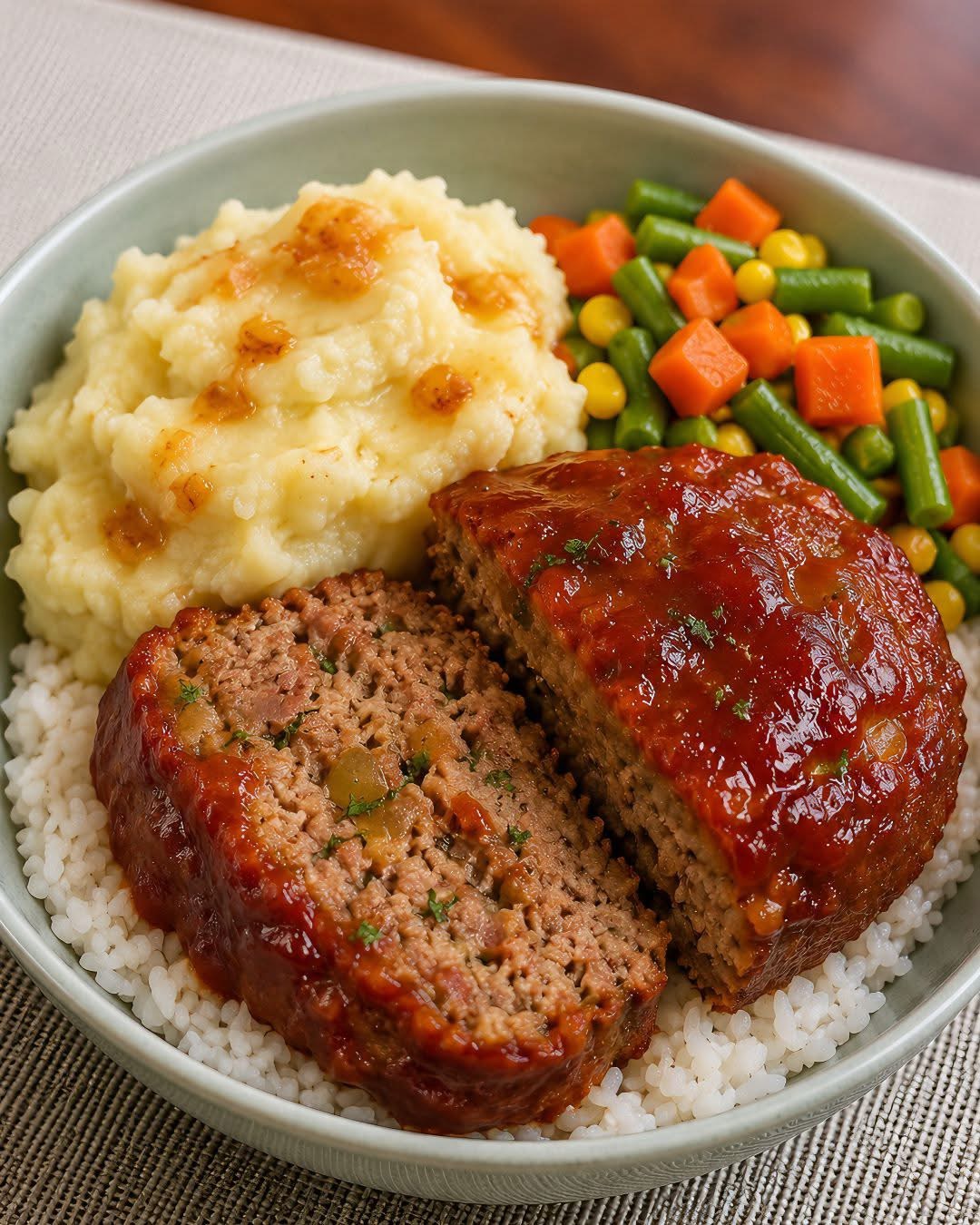
As captured in the delicious presentation of image_4.png, a truly exceptional comfort bowl balances textures and flavors perfectly, pairing a thick slice of glazed meatloaf with creamy mashed potatoes and a vibrant mix of steamed carrots, corn, and green beans, all resting on a fluffy bed of white rice.
However, many home cooks struggle with a common culinary pitfall: a meatloaf that turns out either too dry, resembling a dense block, or too loose, crumbling the moment a knife touches it. Achieving a perfectly moist interior with a sliceable, cohesive structure relies on basic kitchen science and ingredient harmony.
1. The Moisture Blueprint: Why a Panade is Essential
The biggest mistake in meatloaf preparation is treating the dish like a giant, baked hamburger. If you pack pure ground beef into a loaf pan, the meat proteins will tightly contract as they cook, squeezing out all natural juices and leaving you with a tough, rubbery texture.
To ensure your meatloaf remains tender and juicy, you must implement a culinary matrix consisting of three vital elements:
- The Optimal Fat Ratio: Using ground beef with an 80/20 or 85/15 lean-to-fat ratio is critical. The fat renders during the baking process, self-basting the internal meat fibers. Super-lean beef will almost always result in a dry finished product.
- The Panade: A panade is a paste made from starch and liquid—typically fine breadcrumbs, panko, or crushed crackers soaked in milk or broth. The starch molecules absorb the liquid and expand, creating physical pockets within the meat mixture. This traps the rendered juices and prevents the beef proteins from knitting together too tightly.
- Finely Diced Aromatics: Incorporating onions, garlic, and celery adds essential moisture and flavor pockets. As seen in the cross-section slice within image_4.png, these aromatics should be finely minced so they integrate smoothly into the meat mixture without creating large gaps that could compromise the loaf’s structure.
2. Preventing the Crumble: Mastering the Bind and Rest
There is nothing more frustrating than pulling a beautiful dish out of the oven only to have it break apart into a pile of loose ground beef on the plate. Ensuring your meatloaf can hold its shape like the clean cuts pictured in image_4.png requires attention to binders and patience.
The Role of Binders
Eggs act as the primary structural glue in a meatloaf recipe. As heat penetrates the loaf, the egg proteins coagulate and cross-link, binding the ground beef, panade, and minced vegetables into a singular, sliceable network. Generally, two large eggs are perfect for a standard two-pound meatloaf.
The Necessity of the Rest Period
When meatloaf finishes baking, its internal liquids are highly fluid and moving rapidly due to the heat. If you cut into it immediately, those juices will rush out onto your cutting board, leaving the loaf dry and structurally unstable.
The Chef’s Secret: Always tent your meatloaf loosely with foil and let it rest undisturbed for 10 to 15 minutes after it comes out of the oven. This allows the temperature to stabilize, letting the proteins relax and reabsorb those free-flowing juices for a clean, stable slice.
3. The Tangy Glaze: Form and Function
The crowning achievement of any traditional homestyle meatloaf is its sticky, crimson top coating. A classic glaze serves a dual purpose: it delivers a sweet and tangy contrast that cuts through the savory richness of the beef, and it creates an airtight seal that locks in moisture while baking.
[Mix Ketchup, Brown Sugar, & Vinegar] ──> [Bake Loaf for 45 Mins] ──> [Apply Glaze Layer] ──> [Bake Final 15 Mins]To achieve the beautiful, glossy, dark-red finish shown on the outer crust in image_4.png, mix a base of high-quality tomato ketchup with a tablespoon of brown sugar and a splash of apple cider vinegar or Worcestershire sauce. Brush the glaze on during the final 15 minutes of baking. This timing allows the sugars to caramelize into a perfect lacquer without burning or turning bitter.
4. Assembling a Balanced Comfort Bowl
To turn a simple meatloaf into a spectacular, satisfying meal, look to the plating strategy displayed in image_4.png. A well-balanced comfort bowl combines distinct textures and colors to keep every bite interesting:
| Plate Element | Texture & Flavor Profile | Culinary Purpose |
|---|---|---|
| Glazed Meatloaf | Dense, savory, and tender with a sticky, caramelized crust | The protein-rich anchor of the entire meal |
| Mashed Potatoes | Velvety, smooth, and enriched with butter or light gravy | Offers a soft, melting contrast to the texture of the meat |
| Mixed Vegetables | Crisp-tender corn, sweet diced carrots, and snap green beans | Adds structural crunch, natural sweetness, and essential visual color |
| Steamed White Rice | Fluffy, light, and neutrally seasoned | Serves as the ultimate base layer to absorb stray glaze and pan juices |
| By focusing on a proper panade, giving your meat the necessary time to rest, and rounding out the dish with vibrant, complementary sides, you can transform a humble weeknight recipe into a restaurant-worthy dining experience. |